
How to Search the Austin Court Docket
Start with the Austin Search for My Case page. It is the city's official entry point. A name and date of birth pulls up public case histories. Lost the citation itself? A traffic or criminal case can be traced by driver license number. Civil parking matters work differently. There you search by plate number, vehicle identification number, or case number.
- Read the citation and confirm that City of Austin Municipal Court is named.
- Choose the portal route for a municipal criminal, traffic, or parking matter.
- Enter the supported name and birth date, license number, plate, VIN, or case number.
- Open the case history and check the charge, status, payment activity, and latest setting.
- If no record appears, check weekly or contact Austin Municipal Court, then use the cited venue.
Know which system holds your case before you type anything. The Austin portal only handles City of Austin Municipal Court matters. A citation may have been issued outside the city. Or it may have been written for another court. Those cases can sit with a Justice of the Peace instead. Felonies, Class A or B misdemeanors, and major civil filings run through Travis County systems. For broader coverage, the statewide re:SearchTX portal can help. Treat it as a supplement, not a replacement. It covers participating courts only, so start with the Austin source.
Austin Lost-Citation Search Fields
Losing the ticket does not mean a blind countywide name hunt. Austin splits its city cases into separate streams. Pick the wrong one and the search can return nothing even though a case exists. Each stream has its own keys. The public history route needs a name plus date of birth. Traffic and criminal cases add a driver license number. Civil parking runs on vehicle data instead.
| Austin matter | Useful key | Limit |
|---|---|---|
| Municipal case history | Name and date of birth | Public access differs from attorney access. |
| Traffic or criminal citation | Driver license number | A new citation may not be filed. |
| Civil parking citation | Plate, VIN, or case number | Disabled parking is criminal. |
No result does not mean no case. Austin tells people to check the docket again weekly or call the court. Timing, a misspelled name, or the wrong issuing court can all explain the gap. A missing entry never proves dismissal.
The Austin Municipal Court
Austin Municipal Court is the judicial branch of the City of Austin. Its docket covers the lowest-level criminal offenses. That includes traffic and city ordinance charges, juvenile matters, and parking cases. Bench and jury trials go with them. Presiding Judge Sherry Statman leads the court. Mary Jane Grubb serves as the named Municipal Court Clerk. Court settings are open to the public, the city says.
The main campus sits at 6800 Burleson Road, Building 310, Suite 175, Austin, Texas 78744. Hours run 8 a.m. to 6 p.m. Monday, Tuesday, Wednesday, and Friday, with a longer 8 a.m. to 8 p.m. window on Thursday. There is also a North Customer Service Center. It sits at 2121 West Parmer Lane, Suite 116, and is open weekdays from 8 a.m. to 4:30 p.m. Keep in mind these are city service counters, not Travis County clerk offices.
Confirm current hours on the official Austin Municipal Court page. The links there are separated by task. Case search, appearances, payment, records, and special programs each get their own link. That separation keeps a payment screen from being mistaken for the full Austin court docket.
Austin Portal and Court File Layers
What you see in the Austin portal is an index, not a certified court file. It lists activity: status changes, hearing settings, filings by date. Think of it as a running summary. It is not the record itself. Attorneys of record can log in with a bar-card number and password for fuller online access to court files. That deeper view is limited to counsel, though, not to anonymous members of the public.
- Public case history
- The portal view available through name and birth-date search.
- Attorney file access
- An authenticated path for counsel of record.
- Formal municipal record
- A copy requested from Austin Municipal Court when history is not enough.
- Administrative city record
- A non-case record routed through Austin public-information procedures.
Need a certified copy? Ask the court for a formal record. Some material stays off the public docket entirely: juvenile files, sealed cases, expunged matters, and protected information. And if a link comes up blank, that proves nothing about whether the clerk keeps a record, only that it is not displayed online.
Austin Court Dates and Settings
Start with the citation or notice in hand. Then compare it against the newest docket entry before you rely on any court date. Walk-in mitigation dockets run Monday through Wednesday from 8:30 to 11 a.m. and again from 1:30 to 3:30 p.m. Thursday keeps both windows and adds an evening session from 6 to 8 p.m. Show up late and you may be out of luck. The docket closes when check-in ends.
| Date | The citation appearance date or latest court-ordered date. |
|---|---|
| Time | The listed setting time or walk-in check-in window. |
| Courtroom | The location or remote method in the current notice. |
| Judge | The judicial officer assigned to the Austin setting. |
| Setting Type | Appearance, mitigation, pretrial, bench trial, jury trial, or compliance event. |
A reset only replaces your old date once the court itself issues the new setting. If the Austin portal and your paper notice disagree, call the Austin clerk to sort out which one controls. A countywide calendar is handy, but it never substitutes for the notice the court sent you.
Austin Walk-In Mitigation Docket
Walk-in mitigation is a real docket with its own rules. It cannot absorb every Austin case on a whim. Check-in windows govern when qualifying municipal matters can come before the court. One caution matters here: what you see in the portal history is not a hearing, and it settles nothing. Austin sets this docket apart by opening the main campus on Thursday evenings. That is a genuine convenience for people who cannot miss work.
Arrive within the window: Austin says a person who misses check-in must return for the next available docket. Verify eligibility before appearing.
Come prepared. Bring the citation, the case number, any identification the court requests, and proof that supports the outcome you want. Keep in mind that a mitigation appearance leaves the Austin docket open, and a signed order entered later is what controls over any earlier pending status.
Austin Traffic Tickets
An Austin Police citation written inside city limits usually goes to Austin Municipal Court. Pull up the case with a supported search key. Then read what the entry shows: the violation, its status, and any appearance date. From there a person can pay or ask for a hearing. They can also enter a plea, or pursue a deferral or driving safety course. The citation date and the court's current instructions decide eligibility.
Payment works several ways. Austin takes payments online, by phone, by mail, in person, at front-door drop boxes, and through Western Union. Phone payments go to 512-974-4800 during the weekday phone window. Mail goes to P.O. Box 2135, Austin, Texas 78768-2135. Online payments post to the case right away. A mailed payment can take seven days. Anything sent close to a deadline carries real risk of posting late.
Civil parking cases run on plate, VIN, or case number. Leave three of them unresolved and the car can be booted or towed. Disabled-parking citations filed as criminal matters follow the criminal route instead. A JP may issue the ticket rather than Austin. If so, start with Travis County traffic court records.
Austin Community Court Docket
Austin Community Court opened in 1999 as a problem-solving court. Its own materials describe a safe-haven model for voluntary appearances. Show up on your own for an outstanding citation or warrant there. You will not face arrest for those matters. That protection is an Austin Community Court policy. It is not a promise that reaches every Travis County court.
The program also runs a virtual docket each Wednesday at 1:30 p.m. It serves people outside Austin who request access by email. Eligibility and the appearance method belong to this program alone. Keep it separate from the main municipal portal when planning a court date. For the current procedure, check the Austin Community Court page.
For the wider picture, the Austin Municipal Court source lays out that court's public settings. It also shows how the court's services are structured.
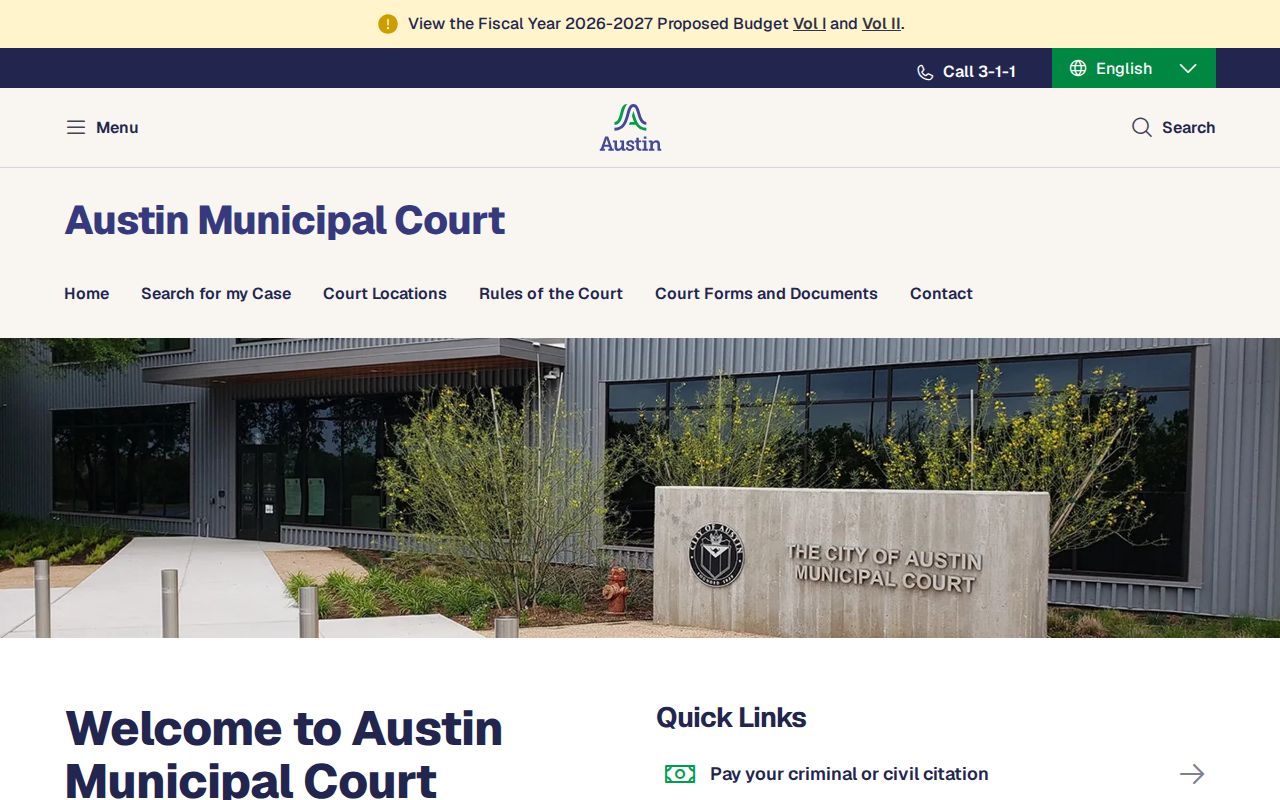
Source: the official page links the Austin docket to the city court that schedules these local cases.
Where Austin Cases End Up
City boundaries do not decide every Austin case. Traffic, parking, ordinance, and fine-only matters filed by the city stay with Austin Municipal Court. Class A or B misdemeanors are different. They generally land in the Travis County Criminal County Courts at Law instead. Adult felonies belong in District Court, with the Travis County District Clerk holding those records. Major civil and family cases move through the proper county court and clerk as well.
Docket flow: Austin Municipal Court › Travis County Courts › District Court
Route the search by issuer and cause number. A stop in extraterritorial jurisdiction may point to one of five Justice of the Peace courts. For county civil, probate, and misdemeanor data, County Clerk Odyssey is the tool. The Travis County court docket maps these divisions. It keeps an Austin search from turning into a county search.
Austin Municipal Portal Controls
The public portal connects the Austin search page to full case history. Search and payment controls sit side by side. Read the label on any button before submitting. A lookup only tells you something. A payment can resolve a balance or record an action under the court's terms. The Austin municipal public portal supplies its current search and payment controls.
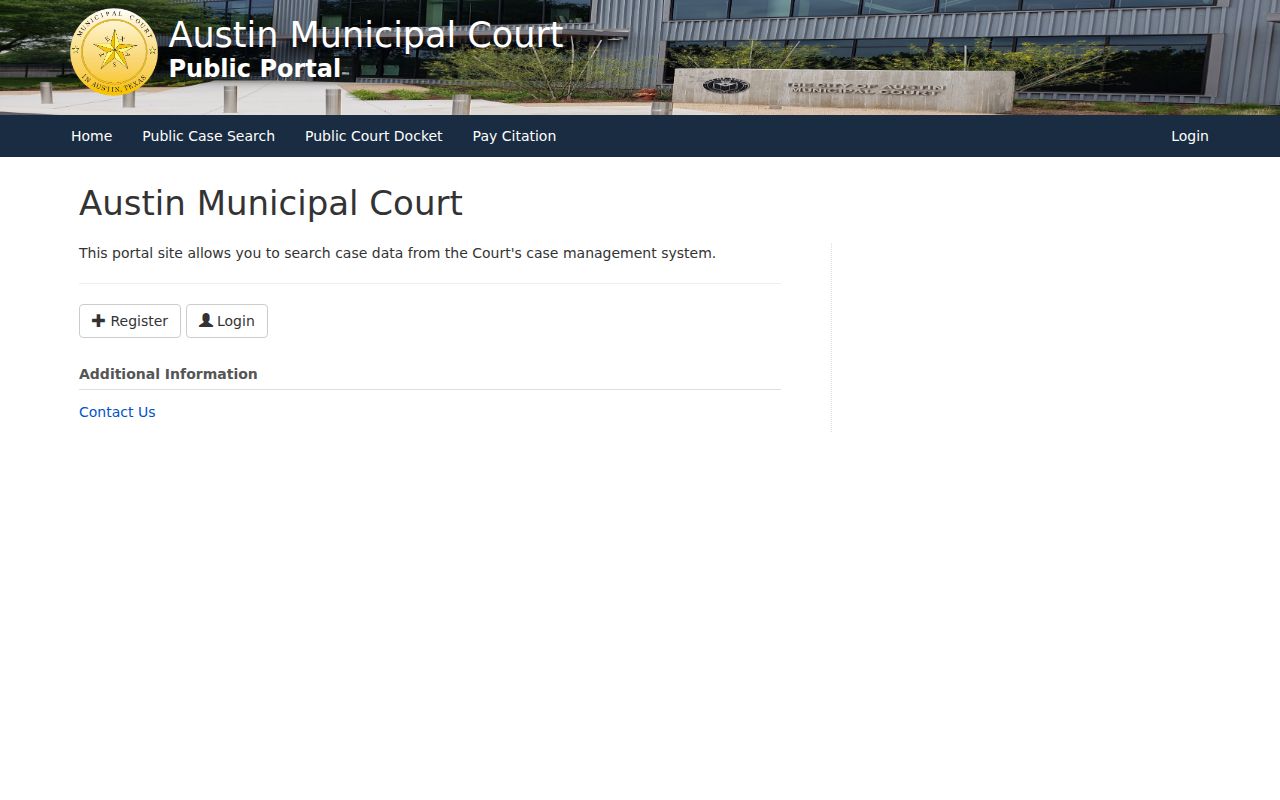
The official portal shows why an Austin case search starts with the city court before any county clerk is involved.
A brand-new citation missing from the portal is common. Follow the court's instruction to recheck weekly and call. If the result names another jurisdiction, stop searching Austin and contact that court directly. A no-result screen is not a final disposition.
Public Access to Austin Court Records
Austin opens its public history access to the public. Its settings open too, but legal limits still apply. Juvenile, sealed, expunged, and protected records may be withheld or narrowed. Formal case copies come from the municipal clerk. Administrative records go through Austin's public-information route. Requests can follow the court's judicial-information or public-information instructions. In-person service is available at both locations.
Key Rules:
Texas Public Information Act governs many government records, while court case files have distinct rules.
Texas Rule of Judicial Administration 12 supplies a request and review framework for judicial records.
Texas Judicial Branch access policy explains judicial records versus court case records.
Hand the clerk the case or citation number, the party name, and the relevant date. Ask up front whether a copy can be certified if that matters. The portal works well for tracking Austin activity. The originating court still holds the authority.
Austin Citation Posting Times
A fresh Austin citation rarely appears the moment an officer writes it. The city tells anyone using the lost-citation route to check back weekly. It also says to call the court. That lag makes filing time part of any sound Austin search. Run the same search again after the issuing record reaches Austin Municipal Court. It can pay off. Posting also slows after an Austin payment, depending on method. Online payments update the Austin case immediately, the city says. A payment mailed to Austin can take up to seven days. Keep the confirmation or mailing proof, then compare it against later docket activity. Does an appearance date fall inside that window? Then call Austin Municipal Court instead of assuming delivery changed the setting. The two delays raise different questions for the clerk. A missing new citation asks whether Austin has filed the case at all. An unposted mailed payment asks whether Austin received and applied the response.